

KYRGYZSTAN
GUIDED SKI & SPLITBOARD TOURS
—
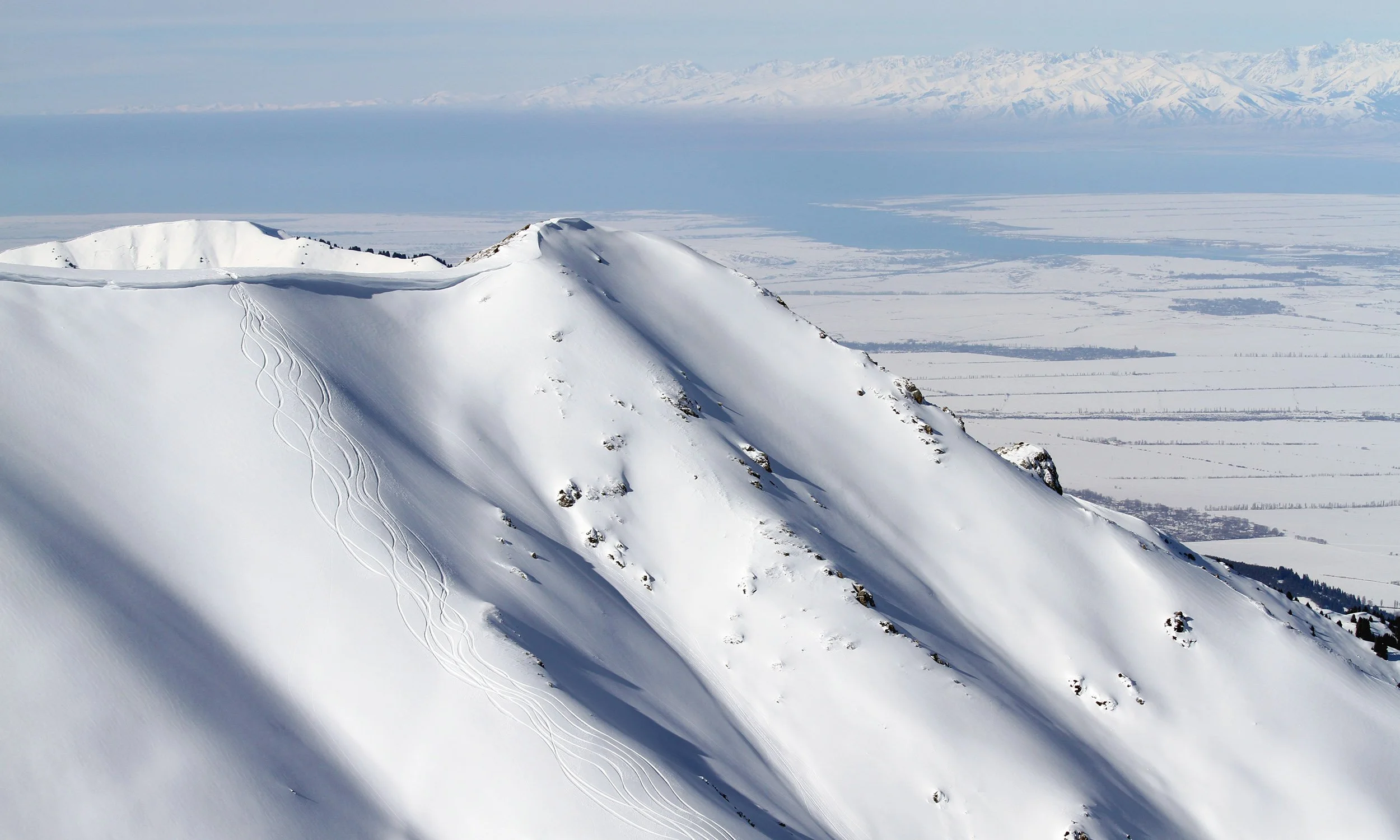
We offer the ultimate setup for adventurous, experienced skiers and riders to explore Kyrgyzstan’s remote Terskey Ala-Too Range. Our winter-ready yurt camp sits at 2,550m with immediate access to 3,600m summits, and overlooks the stunning Issyk-Kul Valley, home to the second largest alpine lake in the world. Our yurts are run in collaboration with locals from the village at the foot of the mountains we play in, contributing an irreplaceable intercultural element to the skiing experience.

REQUIREMENTS
—
GROUP SIZE
Private bookings: A group of 6 will secure the yurts for just you and your crew and give you priority choice of dates. From our experience, it's always better for us, and ultimately you, if you're able to assemble your own group for a private booking vs. us trying to mix and match singles with differing backcountry skill sets and levels of experience.
Mixed groups: For singles and groups of less than 6, we typically offer a few "mixed group" weeks, including Splitfest—a splitboard-only guided week. For these weeks, you’ll have to be more flexible with dates, and it can take some time to put a compatible group together. And there's always the chance that all weeks get claimed for private bookings before we're able to solidify a mixed group. That said, we welcome inquiries from singles and will get a group email circulating as soon as we have 4-5 on the list.
EXPERIENCE
Participants must be advanced to expert level skiers or snowboarders, with at least 1 year touring experience. For safety, efficiency, and to maximize everyone’s skiing experience, all group members for private bookings must have comparable physical abilities and backcountry skill sets. Participation in our guided tours does not require any formal avalanche safety certification or glacier travel or ski mountaineering experience.
PHYSICAL FITNESS
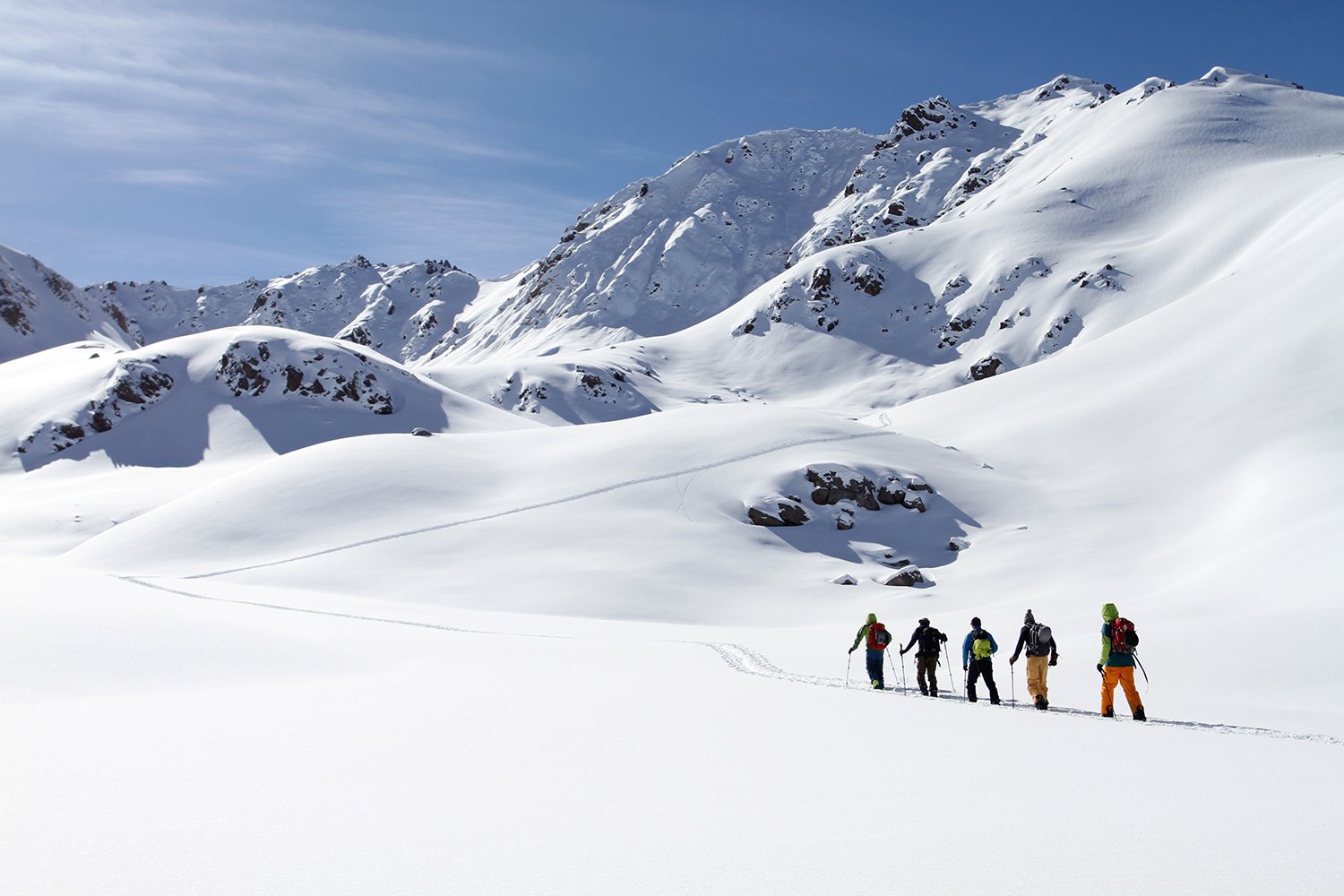
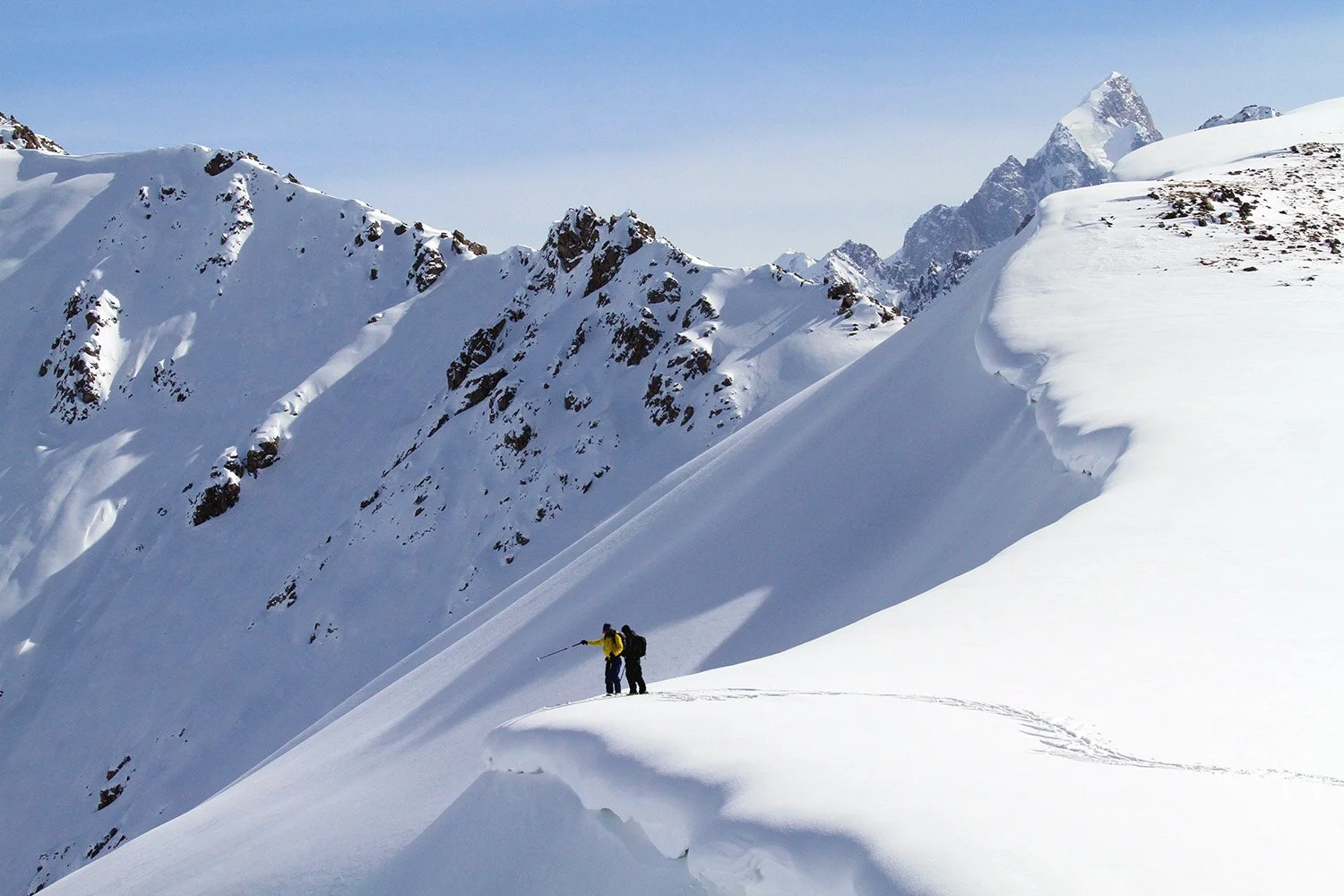
Participants must be in excellent physical condition, and comfortable touring for long distances carrying their own backcountry packs. Single tours from the yurts typically range from 400-1,000m in vertical gain, to maximum elevations of around 3,600m. Summiting the surrounding peaks requires a mix of skinning and non-technical bootpacking on ridgelines. On summit days we’ll typically drop one line, link that with another climb and descent, and then work our way back to the yurts. These are 1,200-1,500m days. Other days we'll choose to lap mid-elevation or forest terrain. Some days we'll go on more of an exploratory tour, possibly for a single objective. The daily tour plan and progression for the week is dependent on group goals as well as snow/avalanche conditions.
GEAR
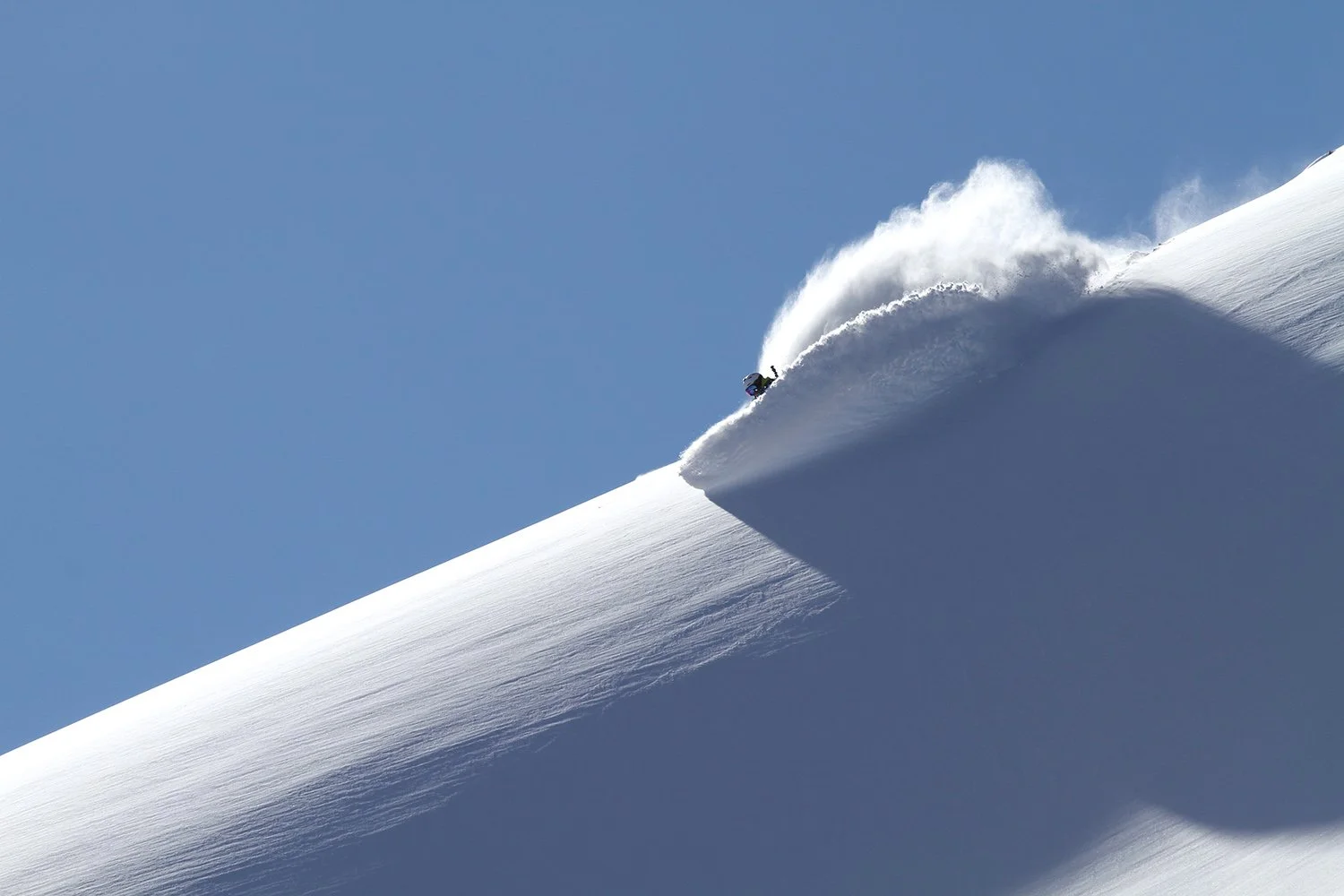
We require fat powder skis (minimum 115mm underfoot…the fatter the better!) and splitboards for snowboarders. Trust us on this one. Kyrgyzstan’s "bottomless" continental snowpack is one of the most unique in the world. You must be able to float big freeride-style turns, at speed. Participants must additionally be prepared with essential touring and avalanche safety gear.
ARRIVAL/DEPARTURE
Our guided tours begin the day before the stated start date and end two days after the stated end date. As an example, for the week of January 28-February 3, we will need you to arrive Bishkek early morning Saturday, January 27 and then depart on or after Monday, February 5. The extra days are for transport to/from our partner village. We will provide additional information to help you book the correct flights and to answer any Qs about arriving early and/or staying afterwards.
DATES & AVAILABILITY
—
We offer 6 weeks of guided riding, at the primest time of year in our zone:
WINTER 2024
WK1: January 28-February 3 (SPACE FOR 1)
WK2: February 4-10 (BOOKED)
WK3: February 11-17 (SPACE FOR 1)
WK4: February 18-24 (SPACE FOR 1)
WK5: February 25-March 2 (BOOKED)
WK6: March 3-9 (BOOKED)
WINTER 2025
WK1: January 26-February 1 (AVAILABLE)
WK2: February 2-8 (AVAILABLE)
WK3: February 9-15 (AVAILABLE)
WK4: February 16-22 (AVAILABLE)
WK5: February 23-March 1 (AVAILABLE)
WK6: March 2-8 (AVAILABLE)
Priority goes to groups of 6. If space for others is indicated, it’s possible to join as a single—send us a message and we’ll connect you to discuss compatibility. See “Group Size” for additional info.
Dates marked “available” are yours with a 20% deposit. Dates marked “requested” will become available again if the requesting group is unable to confirm their reservation within 3 weeks. If your preferred week is either requested or booked, you are welcome to submit a waitlist inquiry.
The yurts are also available for self-guided reservations and bookings by guides before January 28/after March 9, 2024.
EXPERIENCE & PHOTO GALLERY
—
We have dedicated an entire page to describing the experience of a week spent at our yurts. For an even deeper look, be sure to scope these photo galleries from guided weeks past.
GUIDES
—
Our Lead Guides are US, Canada and France-based professional ski and splitboard guides. Each week is additionally staffed with a Tail Guide for a 1:3 guide-to-client ratio. As we host a predominantly English-speaking clientele, our guides are native, or at least fluent, English speakers. In 2023 we invited our friend and newly-certified local guide, Kasidin Musaev, to work with us in the tail position. Kas is certified through the Kyrgyzstan Mountain Guides Association (KMGA), and has years of experience working with us already as our primary partner and camp host. In addition to being passionate, knowledgeable and experienced backcountry travelers and mentors, all of our guides are expert “vibe facilitators.” While half of your trip is spent out in the mountains, the other half is spent at the yurts, where we try our best to create a fun, comfortable and familiar atmosphere. That said, don’t go thinking the 40 Tribes experience is about being insulated from the local culture and local vibe! All of our partners down in the frontcountry as well as our camp staff are locals, and with their presence and involvement in your stay you won't forget where you are in the world. Meet our guides and partners.


WHAT ELSE
—
YURT-BASED TOURING
All of our guided tours are based out of our Jalpak Tash Yurts—the most epic basecamp setup in all of Central Asia. The location of our camp provides immediate access to the surrounding terrain from a starting elevation of 2,550m. The camp features 3 traditional Kyrgyz yurts—one kitchen/dining yurt and separate client and guide yurts—all heated by wood burning stoves and cared for by our local partners.
VILLAGE STAY
Our guided tours include an overnight stay with our partner family on night number one. The homestay experience includes an amazing dinner, comfortable sleeping arrangements, and breakfast before we begin our tour up to the yurts the next morning.
HORSE SUPPORT
No need to worry about shouldering all of your gear on the way up to the yurts. We will arrange horses to porter group gear for the 6km tour between the village and the yurts. Your bags (and a hot lunch) will be waiting for you on your arrival.
GOOD FOOD...AND LOTS OF IT
That’s right, guided stays are fully catered. Our local partners absolutely kill it in the kitchen yurt, fixing up Western-inspired breakfasts complete with french press coffee and traditional Kyrgyz dinners, cooked over the wood burning stove. Portions are large, and there is always a variety of snacks and hot tea available.
APRÈS SKI
Who doesn’t love a little après ski session? Our yurt bar features tallboy beers and bottles of local vodka and cognac.
BOOKING POLICY
A 20% deposit is required to secure your spot, with the remainder due 4 months prior to the tour start date. Our cancellation/refund policies can be found here.
TERMS & CONDITIONS
Our general terms & conditions can be found here.
RELEASE & WAIVER OF RIGHTS
All participants are required to sign our Release and Waiver of Rights.
BOOKINGS
—
Thinking of joining us?
Please consult the link below for full details regarding our pricing and current availability.